
Setting up a vending machine — finding the perfect location for every machine
You have the location, but not the right vending machine? We offer indoor models for offices and hotels, outdoor systems (IP65) for train stations and city centers, and hybrid configurations for both. We will configure the machine to suit your specific location.
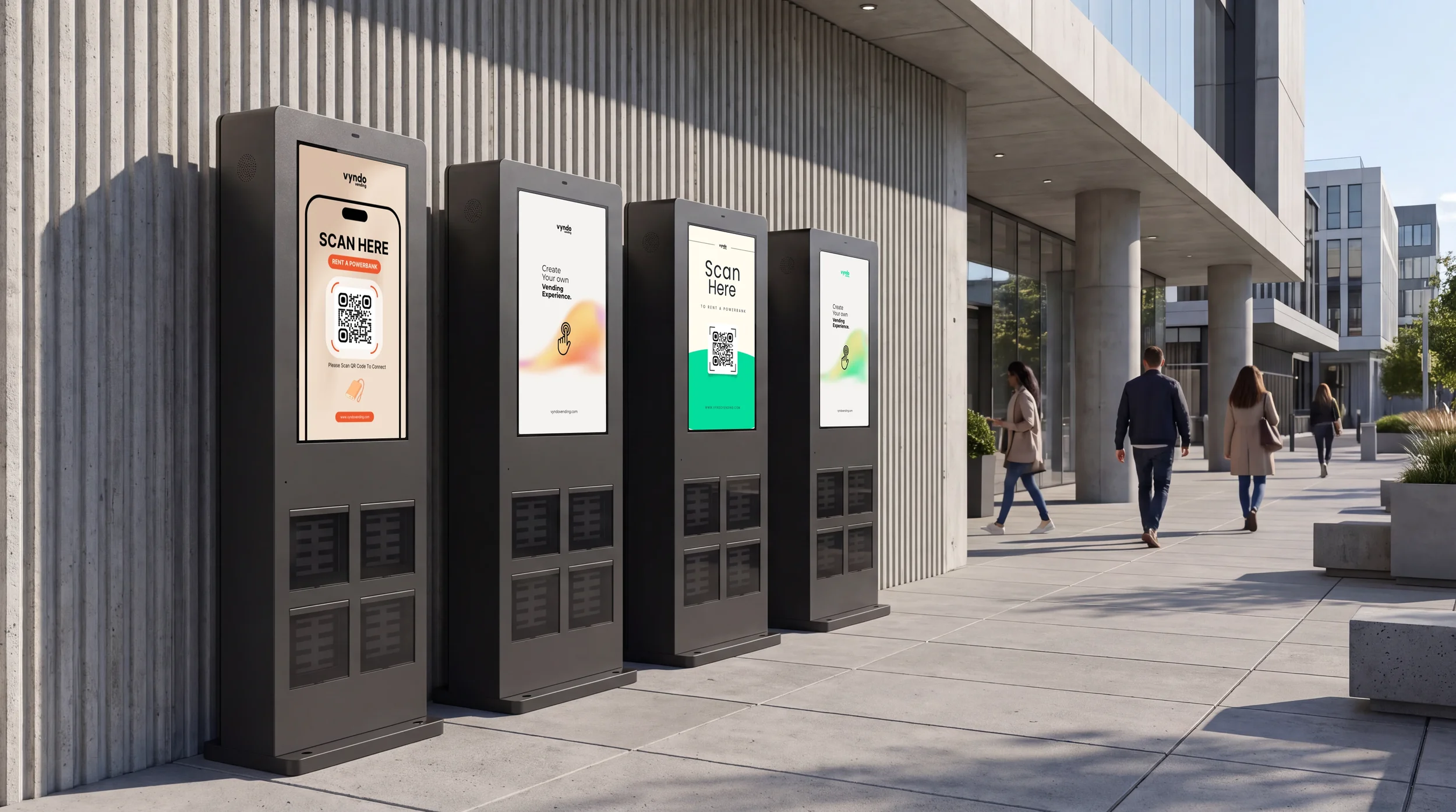
Perfect for offices, hotels, and clinics
Quiet compressors, a compact footprint, and an elegant design. vyndo indoor vending machines operate silently and blend seamlessly into modern architecture. Ideal for spaces where you interact with customers.
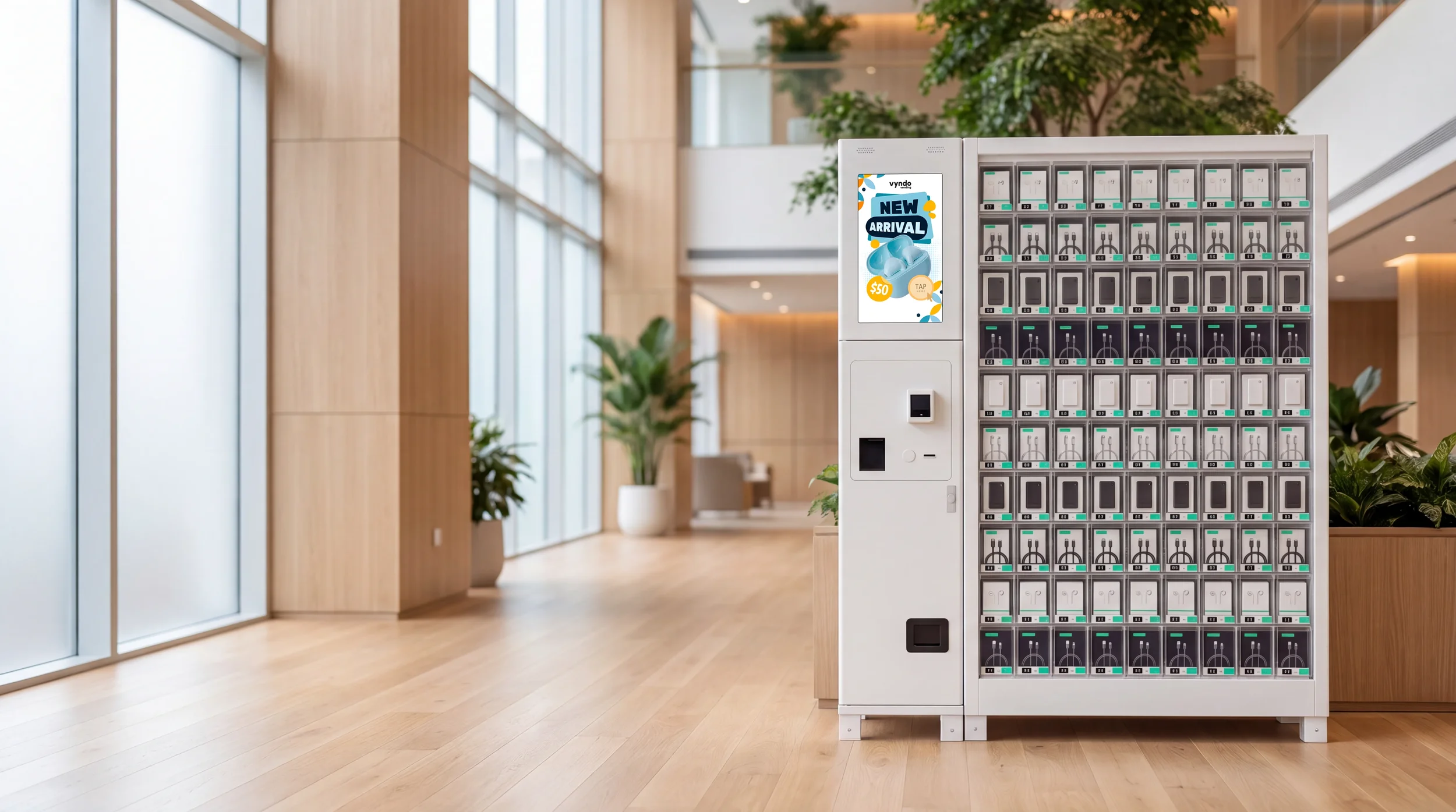
Weatherproof for outdoor use and temperature fluctuations
Outdoor machines withstand temperatures from −20 °C to +50 °C, are IP65-certified, feature reinforced mechanics, and are weather-resistant. Built for train stations, trade fairs, and outdoor areas.
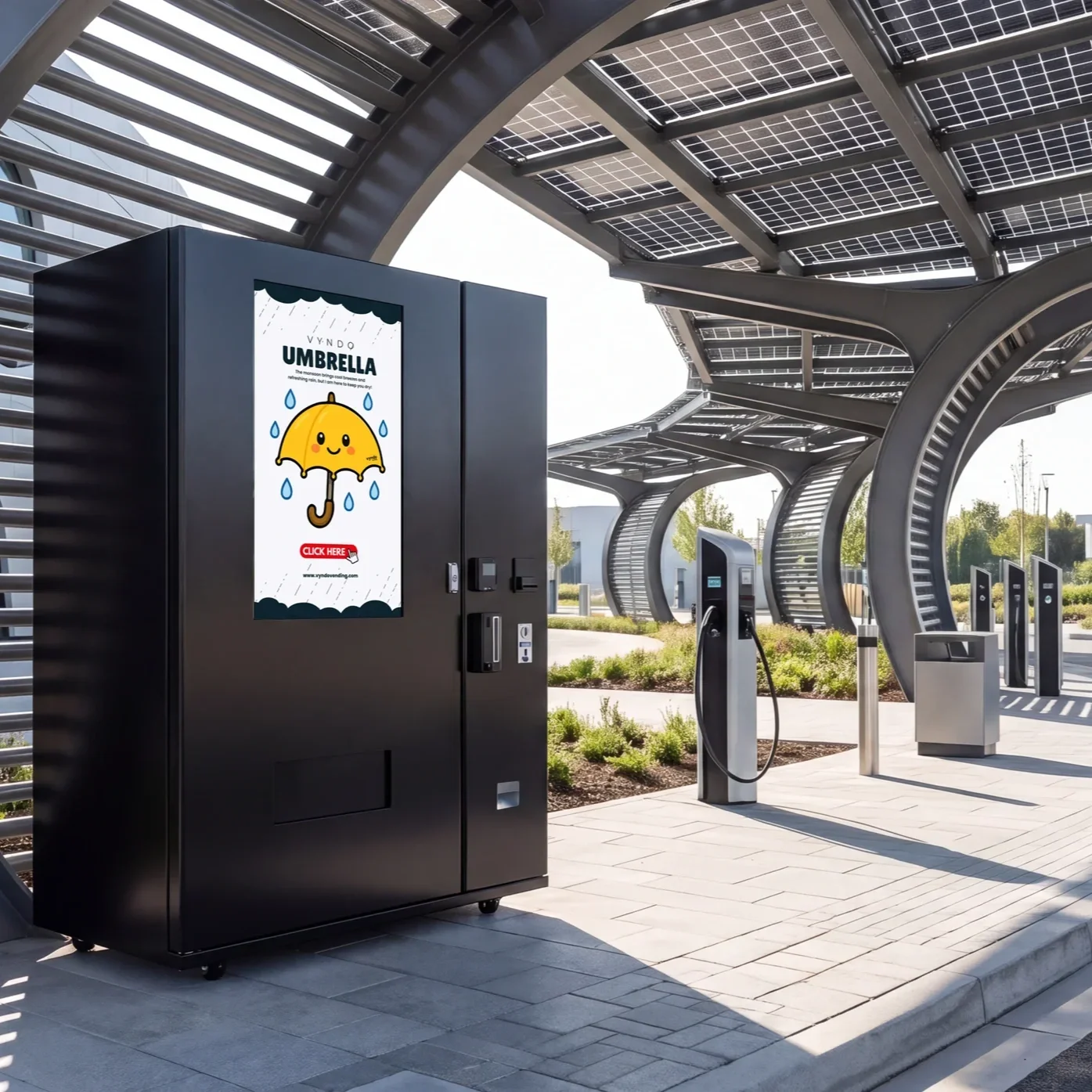
Deployment wherever it is needed
Some locations require both: indoor quiet operation and outdoor weather resistance. The hybrid configuration adapts to your specific needs. Switch between indoor and outdoor use without any modifications.
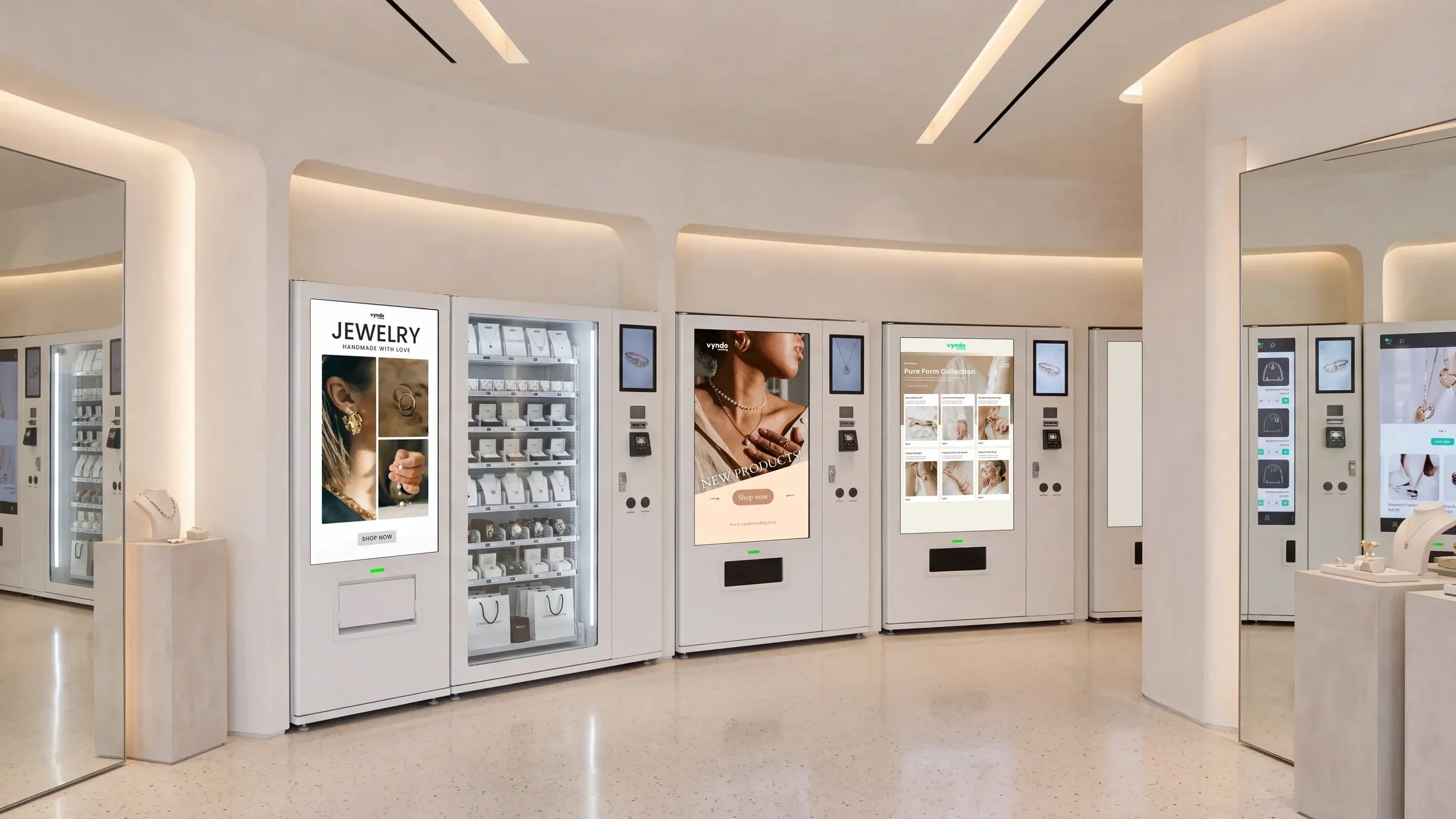
Frequently asked questions about location types
In Germany, vending machines may generally be placed anywhere a business registration exists. On private commercial property (office buildings, hotels, shopping centers, clinics, gyms) no separate permit is required. In public spaces (sidewalks, station forecourts, city centers) you need a special-use permit from the responsible municipality. Restrictions apply to schools and kindergartens for tobacco and alcohol machines.
In public space, most German municipalities require a special-use permit. The costs range from 50 to 500 euros per year depending on the municipality. On private commercial property this requirement usually does not apply. In general, you need a business registration. For regulated products (tobacco, CBD, alcohol), youth protection rules additionally apply and age verification is mandatory. For food, HACCP standards must be met. vyndo advises you on the entire permit process and supports you with the application.
Outdoor machines are suited to anywhere the machine is exposed to the weather and still needs to sell 24/7: train stations, transit stops, city centers, fairgrounds, campsites, gas stations and festival grounds. The common denominator is high footfall with no sheltered interior. The prerequisite is IP65 certification against dust and jet water, plus heating and cooling for −20 °C to +50 °C. At publicly accessible outdoor locations, a special-use permit from the municipality is usually required (cost depending on the municipality €50 to €500 per year); on private commercial land it is not needed. For exposed locations, we additionally recommend an anti-graffiti coating, floor anchoring and optional camera surveillance. We clarify which equipment your location needs in the analysis.
Indoor machines from vyndo run quietly, with quiet compressors and dampened delivery mechanisms. This is deliberate, because indoor locations are often places with customer contact or a need for quiet: offices, libraries, hotels, waiting areas and clinics. A loud compressor kicking in within quiet rooms would be a disturbance there. The cooling technology uses the eco-friendly R290 refrigerant, which works efficiently and quietly while keeping power consumption low. For especially noise-sensitive environments, we advise on placement so the machine disturbs neither acoustically nor visually. Outdoor models, by contrast, are built for weather resistance and impact protection rather than quiet running, because ambient noise dominates outdoors anyway.
No, that is not intended. A pure indoor machine cannot be retrofitted to be weatherproof afterwards, because the housing, seals, heating and cooling are structurally absent. If your location could change or you are still unsure, choose the hybrid configuration from the start instead: it is built for both use cases and switches between indoor and outdoor without modification. That saves you a later new purchase. The reason for this recommendation is economic: a subsequent conversion would be more expensive than going directly for the hybrid version. In the location analysis, we clarify in advance whether your use allows pure indoor technology or whether hybrid is the lower-risk decision.
IP65 is a protection class under an international standard: the first digit (6) stands for full protection against dust, the second (5) for protection against water jets from any angle. For a vending machine this means concretely: rain, dust and splashing water do not get into the electronics, and the machine runs trouble-free outdoors. IP65 is standard for all vyndo outdoor machines and the basic requirement for operation at train stations, in city centers or on outdoor areas. The protection is complemented by reinforced mechanics against vandalism and by heating and cooling for the temperature range −20 °C to +50 °C. That keeps the machine ready to sell even in frost or heat.
That depends on the installation site. Indoor models are quiet, compact and built for air-conditioned interiors — ideal for offices, hotels, clinics and waiting areas. Outdoor models are weatherproof (IP65), vandal-resistant and designed for temperatures from −20 °C to +50 °C — for train stations, city centers and outdoor areas. The rule of thumb: if the machine stands under a roof in an air-conditioned room, indoor is enough. If it is exposed to weather, frost or moisture, you need outdoor with heating and cooling. If you're unsure or the location may change later, the hybrid configuration is the safe choice. We advise you on the right type based on your location data.
Earnings depend on the location type, the range and the visitor footfall. Snack machines generate between €100 and €6,000 in revenue per month at around 50 percent margin. At premium locations such as office buildings with 500+ employees or train stations, revenue at the upper end is realistic. Machines with a DOOH display generate an additional income stream through third-party advertising. For a purchased machine, the payback at good locations is 6 to 12 months.
Four points are decisive: first, the business registration (mandatory). Second, the choice of location — high-traffic locations with 200+ daily passers-by bring the best ROI. Third, the permit, if in public space. Fourth, the technical requirements: power connection (230V, earthed socket) and a stable, level surface. For food: observe HACCP compliance and the KassenSichV (TSE requirement). vyndo handles the location analysis and advises on all requirements.
Still have questions?
Contact us directly. We will respond within 48 hours.
Your location, your vending machine—configure it now
We will advise you on which system suits your location—indoor, outdoor, or hybrid.