
Smart Vending Machine: When Hardware Thinks Along
You drive to the machine to see whether anything is missing, and half the trips are wasted. A smart vending machine reports stock level, sales and faults in real time before you set off. IoT sensors and central software steer the whole fleet.

GDPR compliant · CE and ISO 9001 certified · Made to our own design specifications




The Brain of the Machine
What Does That Give Me?
Optimized Routes
Only drive to machines that are really empty (dynamic routing). Saves 30% time & fuel.
Sales Analysis
Which product runs when? The AI suggests range changes.
Dynamic Pricing
Raise prices when demand is high (chilled water at 35 degrees C) or lower them shortly before the best-before date (happy hour). Centrally by software, with no on-site visit.
Remote Fix
Restart the machine or release a jammed product, from the sofa.
Fault Prevention
The machine reports "cooling compressor running rough" before it fails (predictive maintenance).
Modularly Expandable
Invest in technology that keeps getting better through software updates (OTA) instead of going out of date.

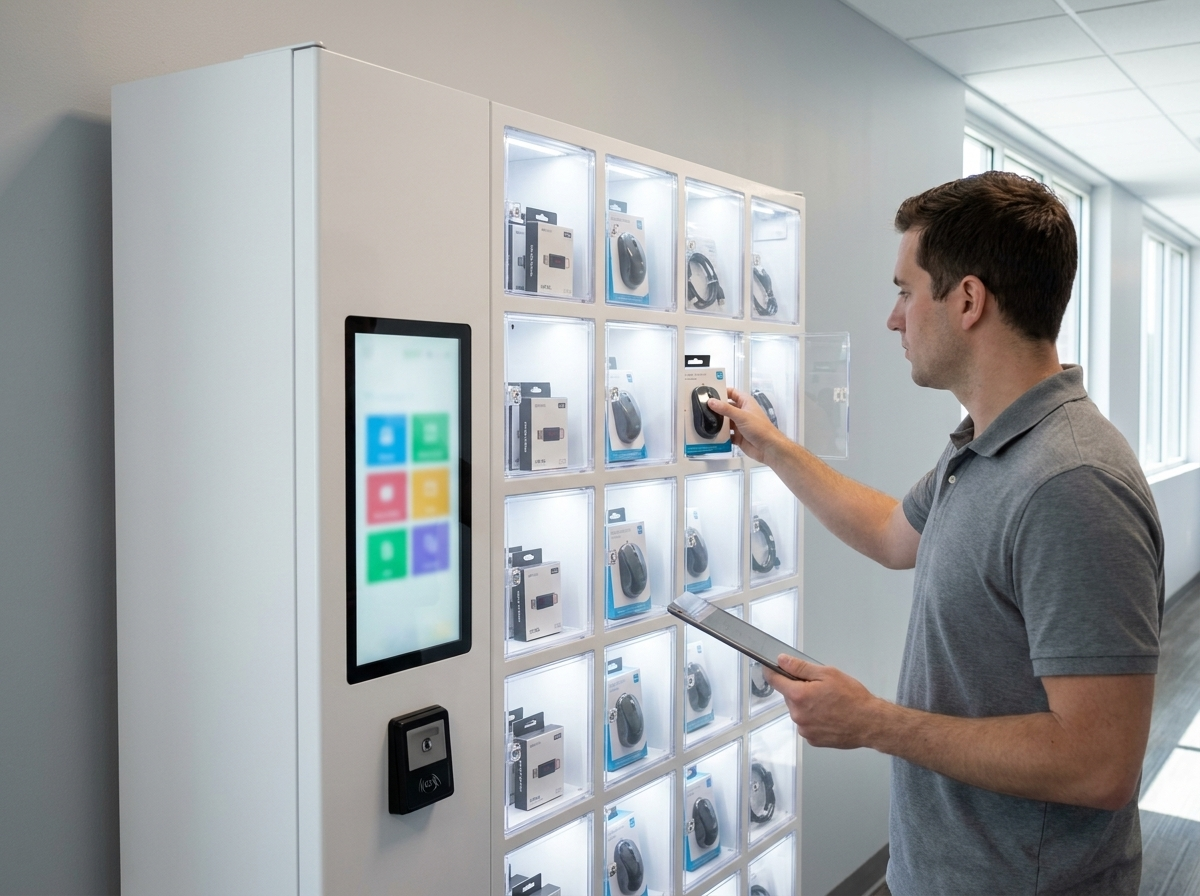

Smart Vending Machine: One CMS for Vending and Signage
Smart in Practice
Office: Range by Data
A facility manager runs three smart machines in office buildings. Telemetry shows which products run when. The range is adjusted data-driven: slow sellers go out, favorites are reordered before they run empty. The result: less out-of-stock, steady revenue with minimal effort.
Hotel: Screen as a Second Income Stream
In the hotel lobby stands a smart premium machine. Guests buy around the clock, and on standby the 43-55" screen plays local recommendations and third-party advertising. This DOOH revenue refinances part of the leasing payment. The machine earns even when nobody is buying.
Retail: Selling After Closing Time
A retailer puts a smart machine in front of the shop. It sells after closing and on Sundays too. Telemetry reports faults at once by push: a coin jam or temperature deviation is detected before goods spoil or revenue is lost.
What Is a Smart Vending Machine?
Technical Specifications
Our smart machines work with standard interfaces (MDB, DEX/DDCMP). Software updates run over the air (OTA). The payment terminal supports all common methods. Telemetry sends data via WLAN or mobile network (SIM). Display options: 15-43 inches, Full HD, optional with touch.

Costs and Financing
Smart machines are priced at 3,000-15,000 EUR (purchase). Rental from a one-day term, leasing from 99 EUR/month, all prices net plus VAT. The extra cost over basic models is recovered through two levers: saved empty runs through predictive refill and DOOH ad revenue on the screen.
Common Questions on IoT
A smart vending machine is a machine connected via IoT that reports stock levels, sales and faults in real time and can be steered remotely. Classic machines only dispense goods. A smart device sends its data over the mobile network to the cloud, where you see it by app or browser. Three core functions: telemetry for live data and predictive refill (you only drive to empty machines), dynamic pricing for central price control and a unified CMS that links vending and the digital signage screen in one software. At vyndo these functions are part of the concept, not a separate add-on.
At vyndo, the telemetry and CMS software is part of the overall concept, not an add-on charge per machine. You steer prices, range, advertising and remote maintenance through one interface in the browser, with no extra license for each individual device. With connected third-party platforms, such as an external vending management system, separate fees may apply. We clarify that transparently in the quote. The advantage of the unified CMS: vending and digital signage run together, instead of you paying for and maintaining two systems in parallel. What is included for your specific use case, you set down in writing in the quote.
All GDPR-compliant. Cameras store no faces, only anonymized metadata (age/gender).
Through the telemetry software you see stock levels, sales and device status in real time by app or browser. When a sensor reports a fault like a coin jam, an open door or a temperature deviation, you get a push message before goods spoil or revenue is lost. Many actions you handle remotely: restart the machine, release a jammed product, change prices. We deploy software updates over the air (OTA), with no need for anyone to be on site. That way you save empty runs and react to problems before the customer stands in front of an empty or broken machine.
Yes. For outdoor locations we offer weatherproof models with IP protection against rain and dust as well as high-brightness displays that stay readable even in sunlight. With the smart machine, outdoor plays telemetry to the full: through IoT sensors you see the stock level, sales and temperature of every outdoor device remotely, without driving there yourself. A fault like a temperature rise in summer reports itself by push before goods are harmed. Predictive refill plans the tours to remote outdoor locations by real need, which saves empty runs especially at more distant spots. You adjust prices centrally via dynamic pricing when demand fluctuates. So an open-air location runs just as data-driven as a device in an office building.
No, you do not need prior technical knowledge. The central software is the heart of the smart machine, and it is built exactly so that you operate it via the browser like a normal dashboard. You change prices via dynamic pricing with a few clicks, maintain content for the screen in the unified CMS, and read the telemetry data with no specialist knowledge. You have to configure no hardware and deal with no IoT technology; that runs in the background. For the initial setup we handle the configuration and set up your range. After that you steer your whole fleet yourself, and our support helps when you want to use a function more deeply.
Two levers act on revenue. First, availability: predictive refill makes sure favorites do not sit empty. Every sold-out item is lost revenue that telemetry prevents. Second, the screen: the 43-55" touchscreen shows product info and offers, and customers buy more when they see products visually. Experience puts this at 15-30% extra revenue compared with a machine without a display. On top comes DOOH revenue: on standby the screen plays third-party advertising and creates a second income stream independent of product sales. Both together quickly make up for the extra cost over a basic machine.
Still have questions?
Get in touch with us directly. We’ll get back to you quickly and honestly.
Become a Smart Operator
Use the technology edge of vyndo.